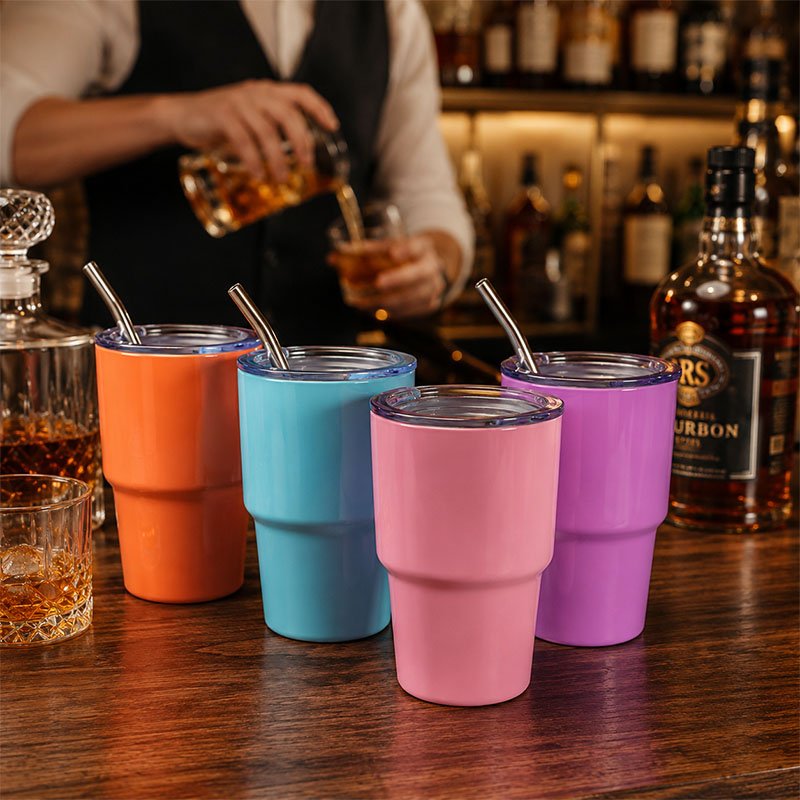


Before ordering insulated water bottles in bulk, buyers should test the exact product that will be mass-produced: the final bottle body, lid, silicone ring, coating, logo, accessories, and packaging.
A reliable pre-production test should cover material confirmation, capacity, insulation, leakage, lid function, coating adhesion, logo durability, drop resistance, dishwasher performance if claimed, packaging protection, food-contact documents, and batch consistency.
At Topnovo, we help brands, wholesalers, Amazon sellers, and promotional buyers review product structure, samples, QC standards, and packaging before bulk production, so the final shipment is easier to control.
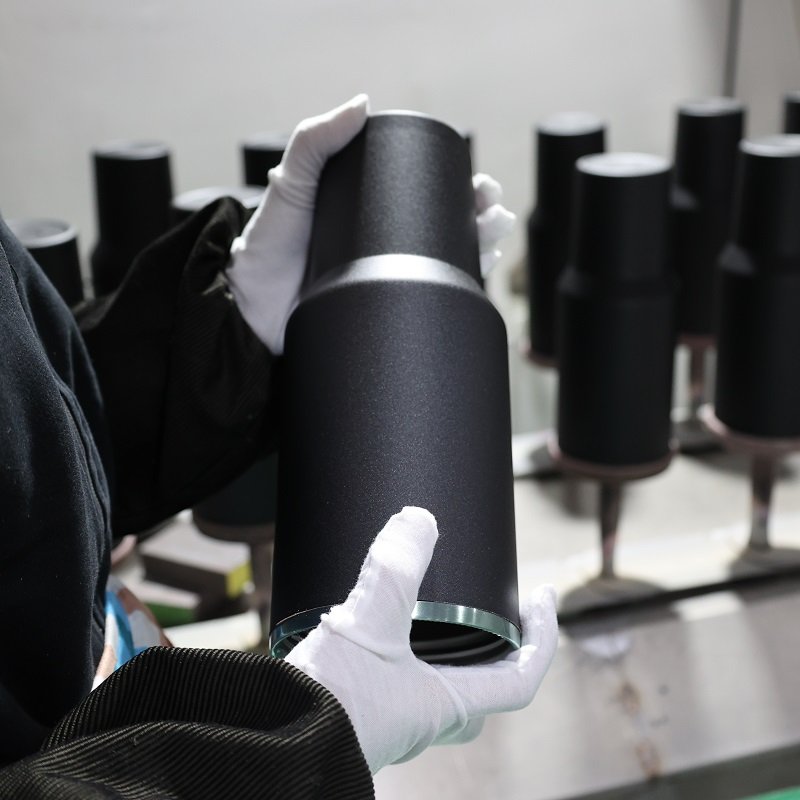
Why Testing Before Bulk Production Matters
Many drinkware problems cannot be found from product photos, drawings, or a quick visual inspection. They appear only after the bottle is filled, placed upside down, opened repeatedly, dropped, washed, packed, shipped, or reviewed by customers.
For B2B buyers, one failed shipment can mean refunds, negative reviews, delayed launches, replacement costs, or damaged retail relationships. Pre-production testing is therefore not only a factory procedure. It is a practical way to manage purchasing risk.
Buyer QC Checklist Before Bulk Production
| Test Area | What to Check | Why It Matters |
|---|---|---|
| Material | 304/316 stainless steel, BPA-free lid, silicone seal | Confirms food-contact safety and corrosion resistance |
| Capacity & Size | Actual volume, height, body diameter, mouth diameter, weight | Prevents listing errors, packaging problems, and cup-holder complaints |
| Insulation | Hot/cold retention, room temperature, test duration, outer-wall heat | Validates the product claim before mass production |
| Leakage | Upside down, sideways, shaken, tilted, hot water where needed | Reduces return risk and customer complaints |
| Lid Function | Thread fit, straw fit, handle strength, button durability | The lid is often the highest-risk part |
| Coating | Color match, adhesion, scratch resistance, rim/base coverage | Protects appearance and customer perception |
| Logo | Position, clarity, rub resistance, final surface compatibility | Ensures brand quality after use and washing |
| Drop & Packaging | Dents, lid cracks, carton drop, dividers, FBA labels | Reduces damage during real use and shipping |
Confirm Materials and Product Specifications
Start with the product specification, not performance testing. If the material, lid, coating, or packaging is wrong, a passed test may not represent the final product.
| Component | What Buyers Should Confirm | Common Risk |
| Bottle body | Inner and outer stainless steel grade, usually 304 or 316 | Wrong material or weaker corrosion resistance |
| Lid and straw | PP, Tritan, silicone, or other food-contact materials | Odor, cracking, poor user experience |
| Seal ring | Silicone size, hardness, fit, and assembly position | Leakage after shaking or sideways storage |
| Surface finish | Powder coating, spray painting, polishing, or special finish | Scratches, peeling, color disputes |
| Logo method | Laser engraving, screen printing, UV printing, heat transfer | Logo fading or poor adhesion |
| Documents | FDA-related food-contact support, LFGB, REACH, Prop 65, BPA-free where required | Market-entry and compliance risk |
For the U.S. market, the FDA explains food contact substances as materials that contact food or beverages and are not intended to have a technical effect in the food. Buyers should review compliance documents before production, especially for lids, straws, seals, and coatings.
Related reading: What Certifications Do Stainless Steel Water Bottles Need?
Check Capacity, Dimensions, and Weight
Small dimensional changes can affect function, packaging, shipping cost, and online listing accuracy. The approved sample should be measured for actual liquid capacity, bottle height, body diameter, mouth diameter, product weight, lid dimensions, straw length, handle size, gift-box dimensions, carton quantity, and carton size.
For Amazon sellers, incorrect capacity or size information may lead to customer complaints, negative reviews, or listing disputes. All approved measurements should be recorded in a product specification sheet and used as the reference for production and final inspection.
Test Insulation Performance
Insulation is one of the main selling points of double-wall vacuum bottles. A claim such as “keeps drinks hot for 12 hours” is only meaningful when the test conditions are clear.
| Test Point | What to Record | Buyer Tip |
| Starting temperature | Water temperature at the beginning of the test | Use a defined test condition instead of a vague claim |
| Room temperature | Ambient temperature during testing | Temperature changes affect results |
| Test duration | 6, 12, or 24 hours depending on product claim | Match the claim used in marketing materials |
| Final temperature | Water temperature after each test period | Compare against the agreed standard |
| Outer-wall heat | Whether the outside becomes unusually warm | A hot outer wall may indicate vacuum failure |
| Condensation | Whether the outer wall sweats during cold testing | Useful for cold-retention products |
For premium, outdoor, sports, or travel bottles, insulation should be checked again after drop testing because impact may damage the vacuum structure.
Perform a Complete Leak Test
Leakage is one of the most common reasons for water bottle returns. The leak test should use the complete final product, including the final bottle body, final lid, final silicone ring, final straw, final valve, and final internal components.
Buyers should:
- Test the bottle upright, upside down, sideways, shaken, tilted, and carried by the handle.
- Use hot water when the product is designed for hot beverages.
- Check the silicone ring, thread connection, air vent, straw valve, drinking opening, flip cover, and bottle-mouth connection.
- Test the final lid and bottle combination together. Testing the lid separately is not enough.
Different lid designs create different leakage risks. For more detail, see How to Choose the Right Water Bottle Lid for Your Brand.m
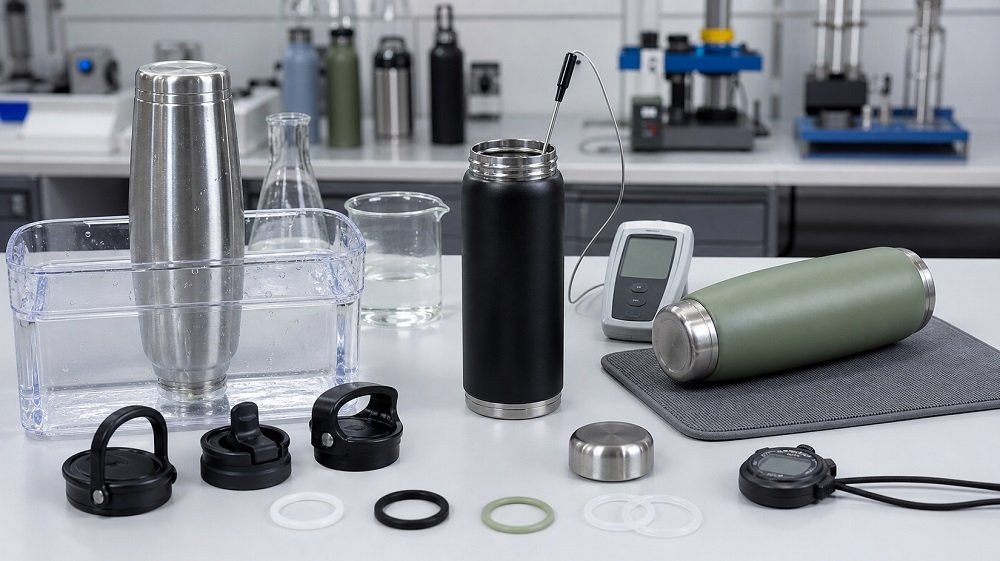
Test Lid Function and Durability
The lid is often the most complex part of an insulated bottle. Even when the bottle body performs well, a weak lid may still cause complaints.
| Lid Test | What It Checks | High-Risk Products |
| Opening and closing | Smooth user operation and fit | Flip lids, push-button lids |
| Seal ring stability | Whether silicone stays in position | Leak-proof bottles |
| Straw and valve fit | Drinking flow and seal performance | Straw bottles, kids bottles |
| Handle strength | Whether the handle supports a filled bottle | Large bottles, travel bottles |
| Drop resistance | Cracks, loose parts, button damage | Kids, sports, outdoor bottles |
| Cleaning access | Whether users can clean parts easily | Straw lids, multi-part lids |
Check Coating and Logo Durability Together

Surface quality strongly affects how customers perceive the product. A bottle may keep drinks hot correctly but still be rejected because of scratches, peeling, uneven color, or poor logo performance.
For coated stainless steel bottles, check Pantone color match, batch color consistency, surface texture, coating coverage, scratch resistance, adhesion, rim finishing, base finishing, logo compatibility, and packaging-rub resistance.
The ASTM D3359 coating adhesion tape test is commonly referenced for evaluating whether a coating remains attached to a substrate. Buyers do not need to become test engineers, but they should ask how adhesion is checked for their actual bottle finish.
| Logo Method | What to Test | Best Use Case |
| Laser engraving | Position, clarity, contrast, edge quality | Durable logos on powder-coated bottles |
| Screen printing | Ink adhesion, color accuracy, rub resistance | Simple one- or two-color branding |
| UV printing | Fine details, color accuracy, scratch resistance | Full-color logos or visual designs |
| Heat transfer | Edge adhesion, alignment, washing resistance | Decorative patterns and gift projects |
| Full-wrap printing | Seam position, pattern alignment, color consistency | Retail and lifestyle collections |
Related reading: Custom Logo Water Bottles and Powder Coating vs Spray Painting for Stainless Steel Water Bottles.
Conduct Drop, Dishwasher, and Packaging Tests
Drop testing helps simulate real use. After the drop test, inspect body dents, lid cracks, handle damage, coating chips, leakage, loose components, sharp edges, and insulation failure. For outdoor, school, sports, or travel bottles, leakage and insulation should be tested again after the drop.
Do not claim dishwasher safe unless the final product has been tested. Some bottle bodies may be suitable for dishwasher use while the lid, straw, coating, or logo is not. If the full product cannot reliably withstand dishwasher cleaning, the packaging and product page should recommend hand washing.
Packaging should be designed according to the actual distribution route. ISTA test procedures are widely used for transport packaging evaluation. For B2B buyers, the key point is simple: packaging should be tested based on the real shipping method, such as full-container shipment, LCL shipment, parcel delivery, Amazon FBA, retail distribution, or promotional delivery.
Related reading: Wholesale Water Bottle Manufacturer for Amazon FBA Sellers
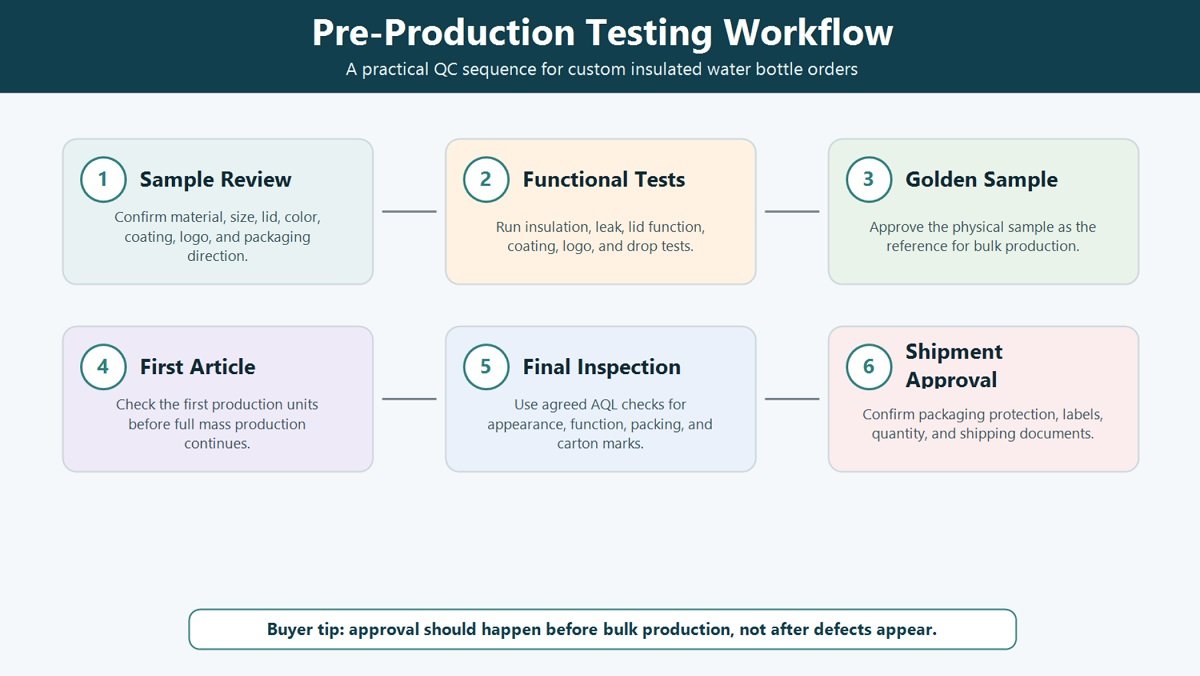
Approve a Golden Sample and First Production Units
For custom colors, new lids, new molds, new logos, or new packaging, the buyer should approve a final physical sample before production. This approved sample is commonly called the golden sample.
The golden sample should represent the final approved material, structure, capacity, color, coating, logo, lid, accessories, packaging, and workmanship. It is more reliable than vague descriptions such as “similar color,” “normal quality,” or “same as last order.”
After the golden sample is approved, buyers should still review the first units produced under actual production conditions. If the first production units do not match the approved sample, corrections should be made before full production continues.
Agree on AQL Standards Before Shipment
Sample approval does not replace final inspection. Before shipment, bulk products should be inspected using an agreed sampling plan.
The ISO 2859-1 AQL sampling standard defines sampling schemes indexed by acceptance quality limit for lot-by-lot inspection. In practical terms, AQL helps buyers and suppliers agree how many units to inspect and what defect level is acceptable.
| Defect Type | Examples | Typical Action |
| Critical | Safety hazards, sharp edges, prohibited materials, serious leakage, contamination | Reject or correct before shipment |
| Major | Poor insulation, broken lids, wrong logo, incorrect color, severe scratches, wrong packaging | Correction or buyer approval required |
| Minor | Small cosmetic marks, slight approved color variation, minor print imperfections | Accept only within agreed tolerance |
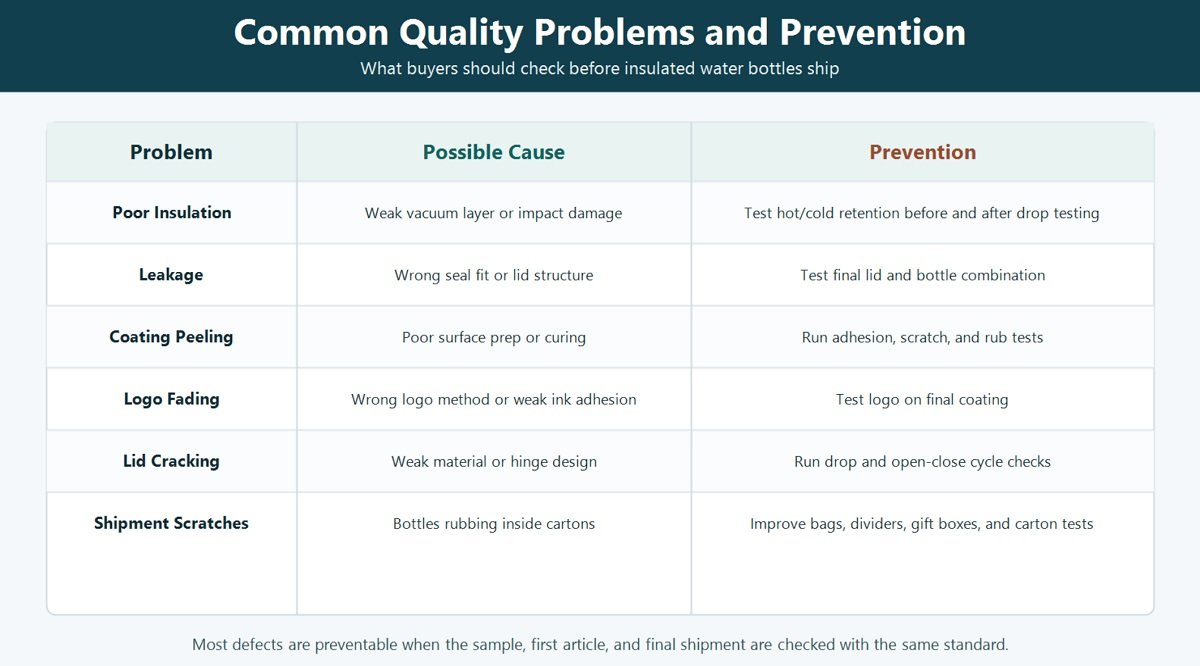
Common Quality Problems and How to Prevent Them
| Problem | Possible Cause | Prevention |
| Poor insulation | Weak vacuum layer, welding problem, or impact damage | Test insulation before production and retest after drop testing when required |
| Leakage | Incorrect silicone ring, poor lid structure, thread mismatch, assembly problem | Test the final lid and bottle combination in several positions |
| Coating peeling | Poor surface preparation, incorrect curing, coating incompatibility | Run adhesion and scratch tests on the actual bottle |
| Logo fading | Wrong logo method, weak ink adhesion, coating mismatch | Test the logo on the final surface before mass production |
| Lid cracking | Weak plastic material, poor hinge design, excessive assembly pressure | Run drop tests and repeated opening-cycle checks |
| Shipping scratches | Bottles rubbing together, weak dividers, weak gift boxes | Improve wrapping, dividers, cartons, and packaging tests |
What Different Buyers Should Prioritize
| Buyer Type | Priority Tests | Why |
| Amazon sellers | Leakage, coating durability, packaging protection, barcode accuracy, carton drop, final inspection | Directly affects reviews and returns |
| Outdoor brands | Insulation, impact resistance, handle strength, coating durability, lid reliability | Products face rough daily use |
| Corporate gift buyers | Logo quality, color consistency, packaging appearance, delivery accuracy | Brand presentation matters most |
| Kids bottle buyers | Material safety, lid safety, leakage, drop resistance, small components, cleaning access | Safety and repeated handling are key |
| Retail brands | Appearance, packaging, barcode accuracy, batch consistency, retail presentation | Shelf appeal and consistency matter |
| Premium brands | Material confirmation, surface finish, logo quality, user experience, packaging presentation | The product must support a higher selling price |
Topnovo’s Three-Stage Quality Control Process
Topnovo’s water bottle quality control process focuses on controlling risk before, during, and after production. Topnovo has 16 full-time quality-control team members and applies inspection across incoming materials, production, assembly, packaging, and final shipment.
| Stage | What We Check | Buyer Benefit |
| Sample approval | Structure, material, capacity, lid fit, coating, logo, insulation, leakage, packaging direction | Confirms the product before bulk production |
| Production control | Incoming materials, dimensions, color consistency, surface finish, logo position, lid assembly, functional performance | Reduces batch variation and hidden defects |
| Final inspection | Appearance, leakage, insulation, lid function, logo, coating, packaging, carton marks, quantity, AQL requirements | Reduces shipment and after-sales risk |
FAQ
What are the most important tests for insulated water bottles?
Insulation and leakage are the most important functional tests. For customized products, coating durability, logo performance, lid function, and packaging protection are also essential.
Should I test a sample before bulk production?
Yes. Buyers should approve a physical sample before production. For custom projects, the first production units should also be checked before full production continues.
Can a dropped bottle lose insulation?
Yes. A strong impact may damage the vacuum structure even when external damage looks minor. Insulation should be tested again after drop testing when impact resistance is important.
How can I check whether the logo will last?
Apply the logo to the final coating and conduct rubbing, scratching, adhesion, washing, or dishwasher tests according to the logo method and product claim.
What should Amazon sellers test first?
Amazon sellers should prioritize leakage, coating durability, packaging protection, barcode accuracy, carton drop resistance, and final inspection because these factors directly affect returns and reviews.
Is AQL inspection enough to guarantee quality?
No. AQL is a sampling method for evaluating a production batch. It should be combined with clear specifications, sample approval, production control, functional testing, and final inspection.
Final Thoughts
Testing insulated water bottles before bulk production is not simply a factory formality. It is a practical way to protect product quality, delivery schedules, customer satisfaction, brand reputation, and purchasing costs.
The most reliable approach is to test the exact product that customers will receive: the final bottle body, final lid, final silicone ring, final coating, final logo, final accessories, and final packaging.
Planning a custom insulated water bottle project? Request a custom water bottle sample from Topnovo and confirm the testing plan before bulk production.